1Portal
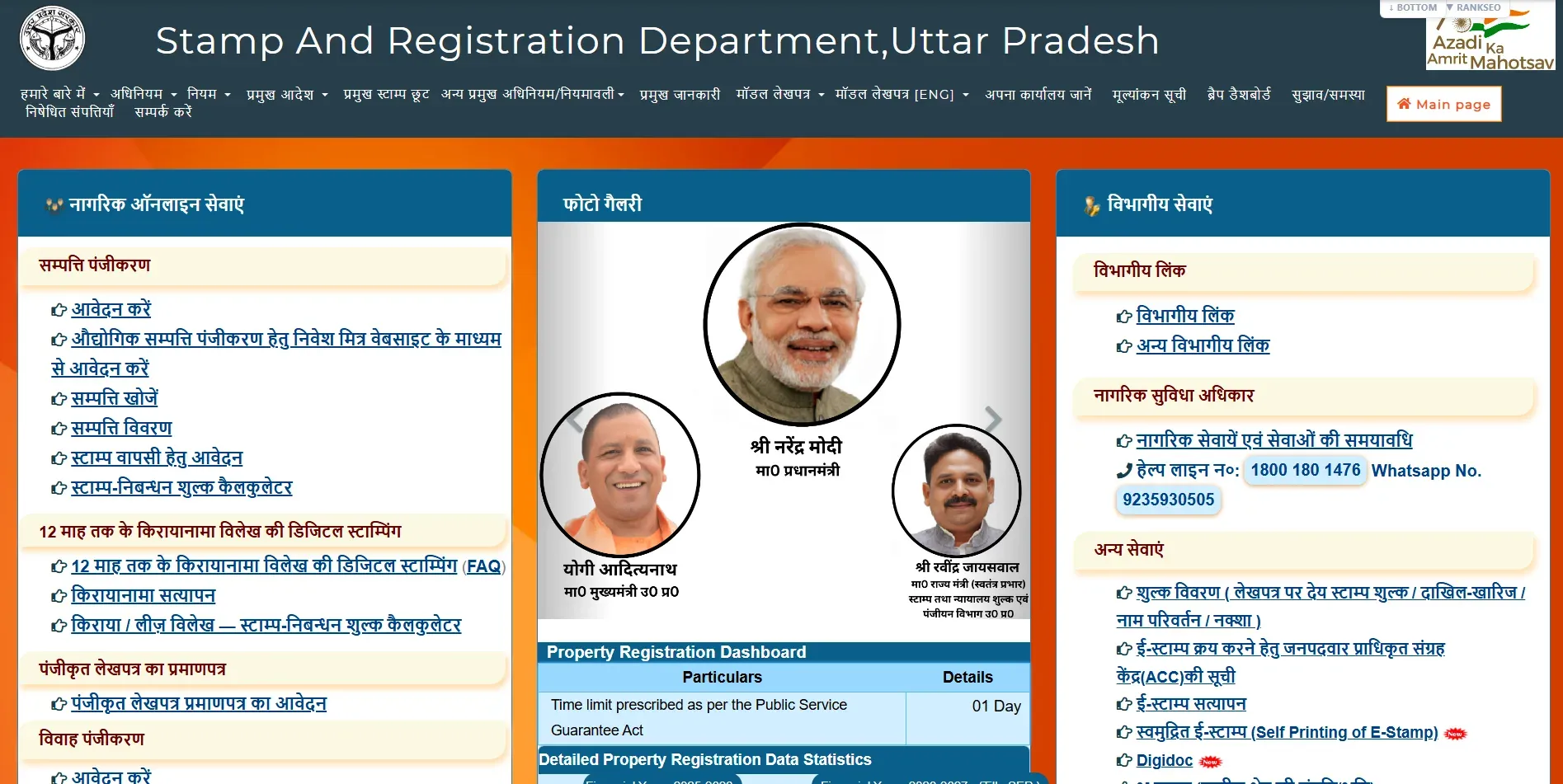
igrsup.gov.in
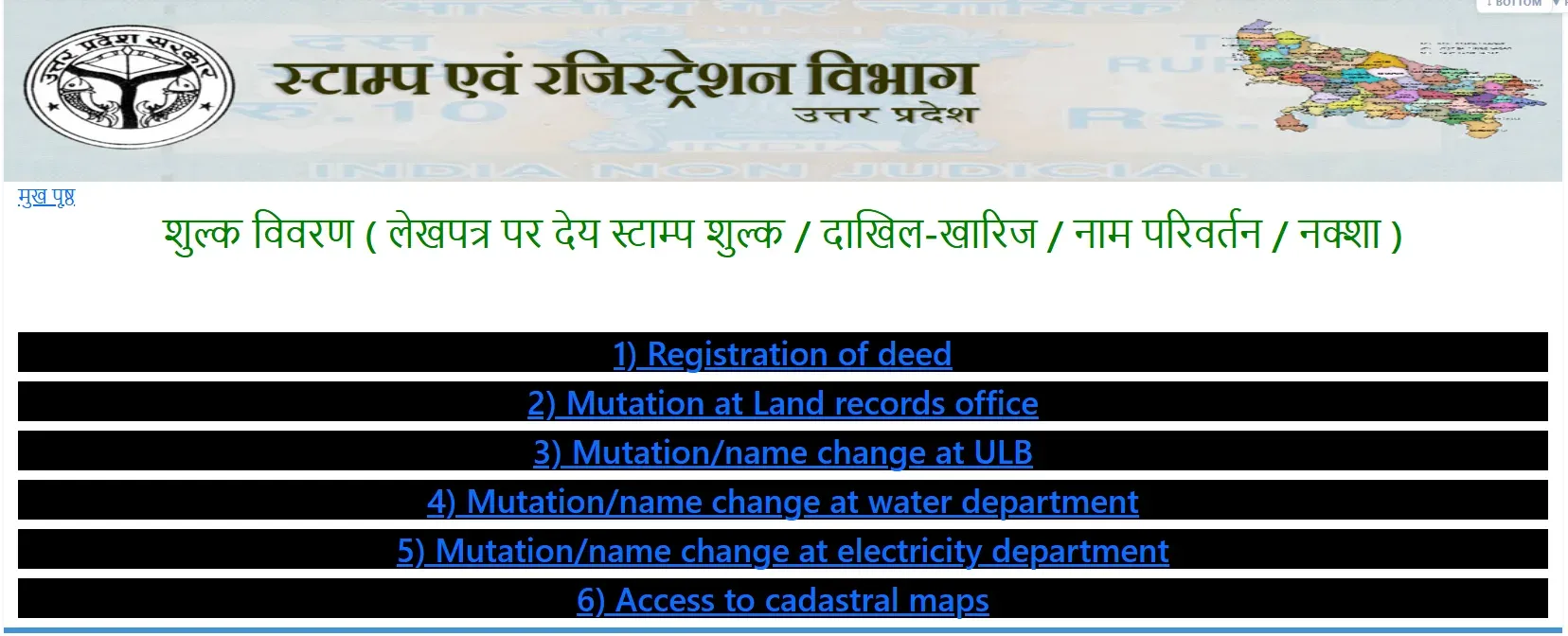
2Stamp duty
Male 7% | Female 6% | Joint (M+F) 6.5% — of property value or circle rate, whichever is higher.
3Registration fee
1% of property value (uniform, all buyers).
4Encumbrance Certificate
igrsup.gov.in → “भारमुक्त प्रमाणपत्र / बारह साला” → Apply.
5Marriage Registration
igrsup.gov.in → “विवाह पंजीकरण” → Hindu Marriage Act, 1955.
6Contact
0532-2623667 (Prayagraj HQ) | 0522-2308697 (Lucknow Camp Office). Portal helpline: 1800 180 1476, WhatsApp 9235930505.
₹27,078 Cr Revenue (FY 2023-24) · 40 Lakh Documents Registered Annually · 379 SROs · 75 Districts · 2 Cr Annual Visitors · PRERNA 3.0
What is IGRSUP — The Department Behind Every Property Transaction in UP
IGRSUP is the official online portal of the Stamp and Registration Department, Government of Uttar Pradesh, accessible at igrsup.gov.in. The department is headed by the Inspector General of Registration and Commissioner of Stamps, with headquarters at the Revenue Council Building, Civil Lines, Prayagraj, and a camp office at Vishwas Commercial Complex, Gomti Nagar, Lucknow (source: indiacustomercare.com contact directory, verified against official department records).
The acronym “IGRSUP” stands for the department head’s designation — Inspector General of Registration and Stamps, Uttar Pradesh. Several websites incorrectly expand it as “Integrated Grievance Redressal System, Uttar Pradesh” — that is actually the name of the CM’s complaint portal at jansunwai.up.nic.in, a completely different system. IGRSUP (igrsup.gov.in) is the Stamp and Registration Department’s portal, not a grievance system.
The scale of this department is enormous. According to the official Stamp and Registration Department presentation (hosted on cdnbbsr.s3waas.gov.in), the department collected ₹27,078.77 crores in revenue in FY 2023-24 — making it the 3rd largest revenue contributor to the UP state exchequer after GST and Excise. Approximately 2 crore people visit Sub Registrar Offices annually, and roughly 40 lakh documents of 62 different types are registered each year across the state’s 379 Sub Registrar Offices (SROs) spread across all 75 districts and 18 divisions. The entire system runs on PRERNA 3.0 — a fully in-house developed software platform for document registration, with SROs computerized between 2012 and 2016 and more than 10,000 e-stamping points of sale covering every subdivision.
Services Available on IGRSUP
| # | Service | What It Does |
|---|---|---|
| 1 | Property/Document Registration (संपत्ति पंजीकरण) | Register sale deeds, gift deeds, lease deeds, power of attorney, and other property documents |
| 2 | Stamp Duty Calculation & Payment | Calculate applicable stamp duty based on circle rate, pay via e-stamp (Stock Holding Corporation) |
| 3 | Encumbrance Certificate / Barah Sala (भारमुक्त प्रमाणपत्र / बारह साला) | 12-year transaction history proving a property has clear title — mandatory for home loans |
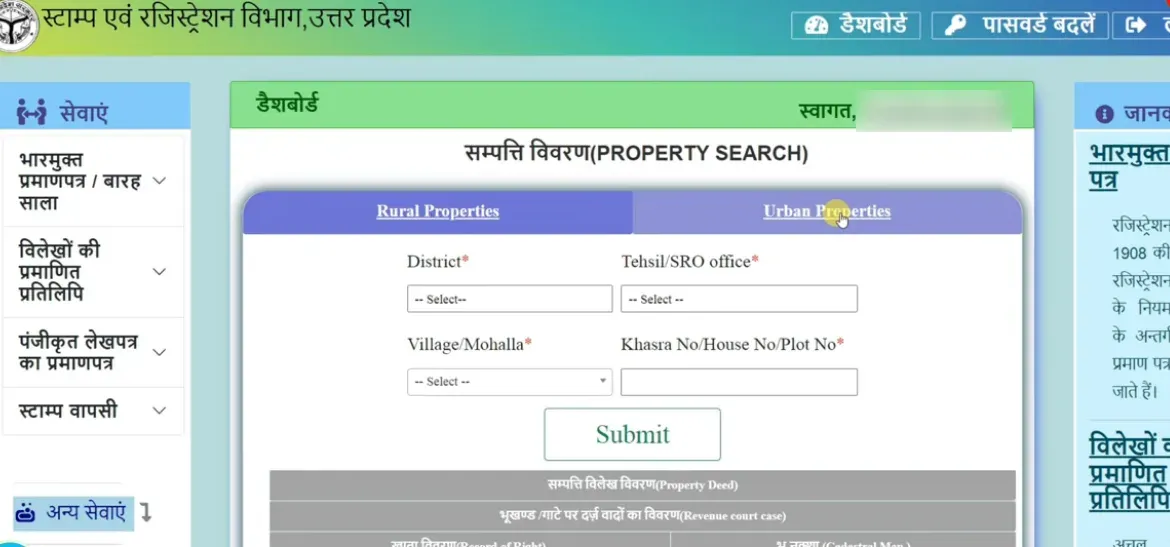
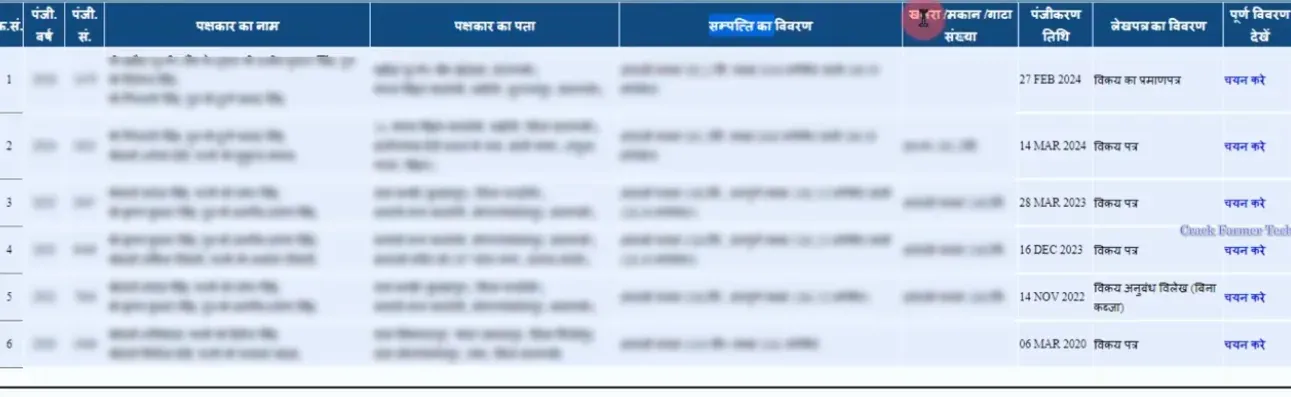
| 4 | Property Search / Sampatti Vivaran (सम्पत्ति विवरण) | Search property details by seller/buyer name, area, or village |
| 5 | Index / Fehrist (फेहरिस्त) | Public record of all registered documents — searchable by area, village, tehsil, party names |
| 6 | Hindu Marriage Registration (विवाह पंजीकरण) | Marriage registration under Hindu Marriage Act, 1955 at Deputy Registrar Office |
| 7 | Certified Copies of Deeds | Attested copies of registered documents for courts and public |
| 8 | E-Stamp Verification | Verify any e-stamp certificate’s Unique Identification Number (UIN) to confirm authenticity |
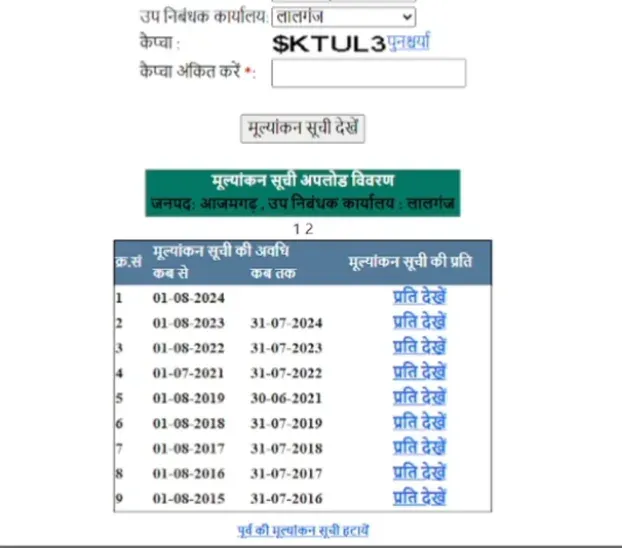
| 9 | Circle Rate Lookup (मूल्यांकन सूची) | Check current government guideline rates by district, tehsil, and area |
| 10 | Stamp Refund Application | Apply for refund of unused or excess stamp duty paid |
Stamp Duty Rates in UP — 2026
Stamp duty is calculated as a percentage of the property value OR the circle rate — whichever is higher. This is the rule most buyers miss. If you negotiate a purchase price of ₹40 lakh but the government’s circle rate for that area is ₹60 lakh, stamp duty is calculated on ₹60 lakh — not on your negotiated price. The circle rate is notified by the district administration and updated periodically. Check the current circle rate for your area on igrsup.gov.in before calculating costs.
| Buyer / Ownership Type | Stamp Duty | Registration Fee | Total |
|---|---|---|---|
| Male buyer | 7% | 1% | 8% |
| Female buyer (sole, property ≤ ₹1 Cr) | 6% | 1% | 7% |
| Joint (male + female) | 6.5% | 1% | 7.5% |
| Joint (female + female) | 6% | 1% | 7% |
| Joint (male + male) | 7% | 1% | 8% |
Female buyers receive a 1% stamp duty concession on properties valued up to ₹1 crore — approved by the UP Cabinet on July 22, 2025 under CM Yogi Adityanath’s chairmanship, expanding the previous ₹10 lakh cap (source: newsonair.gov.in, July 23, 2025; Hindustan Times via zeus.firm.in). Maximum saving: ₹1 lakh on a ₹1 crore property. For properties exceeding ₹1 crore, the full 7% stamp duty applies regardless of the buyer’s gender. Joint ownership between husband and wife at 6.5% falls between the two rates.
(Stamp duty rates confirmed across homefirstindia.com, godrejcapital.com, squareyards.com, bajajfinserv.in, grihumhousing.com, 2bigha.ai, and 360realtors.com — all citing 2026 rates.)
UP Stamp Duty Calculator
- Duty charged on
- Stamp duty
- Registration fee (1%)
- Total payable
Above ₹1 crore the women’s 1% concession does not apply, so 7% is used.
Estimate based on the rates on this page. The exact amount depends on the document type, location and the current circle rate.
Check the exact amount on igrsup.gov.in ↗On the portal: स्टाम्प-निबन्धन शुल्क कैलकुलेटर
Calculation Example
₹60 lakh property in Lucknow, male buyer:
- Circle rate check on igrsup.gov.in: ₹55 lakh for that area
- Stamp duty calculated on ₹60 lakh (transaction value higher than circle rate)
- Stamp duty: 7% of ₹60,00,000 = ₹4,20,000
- Registration: 1% of ₹60,00,000 = ₹60,000
- Total payable: ₹4,80,000
Same property, female buyer:
- Stamp duty: 6% of ₹60,00,000 = ₹3,60,000
- Registration: 1% = ₹60,000
- Total: ₹4,20,000 — saving ₹60,000
Property Registration — Step by Step
Before You Start — Documents to Gather
- Sale deed (drafted by lawyer, signed by buyer and seller)
- E-stamp certificate (proof of stamp duty paid — generated on igrsup.gov.in)
- Aadhaar cards of buyer, seller, and 2 witnesses (biometric verification mandatory)
- PAN cards of buyer and seller
- Passport-size photographs of all parties
- Encumbrance Certificate (EC / Barah Sala) — to prove the property has no pending loans or disputes
- Property tax receipts (proof of up-to-date municipal tax payments)
- Previous ownership deed or khatauni from UP Bhulekh
- NOC from relevant authority (housing society, development authority) if applicable
The 9-Step Process
- Login. Create an account on igrsup.gov.in or login with existing credentials.
- Start new registration. Select “संपत्ति पंजीकरण” (Property Registration) → “नवीन आवेदन” (New Application).
- Enter property details. District, tehsil, village/mohalla, khasra/plot number, property type (residential/commercial/agricultural), area, and transaction value.
- Enter party details. Buyer(s) and seller(s) — name, father’s name, Aadhaar, PAN, address, photograph. For multiple buyers or sellers, enter each separately.
- Calculate stamp duty. The portal auto-calculates based on the transaction value and the circle rate. The higher of the two is used. Review the calculation before proceeding.
- Pay stamp duty online. E-stamp payment through the portal’s payment gateway (Stock Holding Corporation CRA). After payment, an e-stamp certificate with a Unique Identification Number (UIN) is generated. Save this — it is required at the Sub Registrar Office.
- Upload documents. Sale deed, e-stamp certificate, ID proofs, photographs, EC, tax receipts. Each file in the specified format and size.
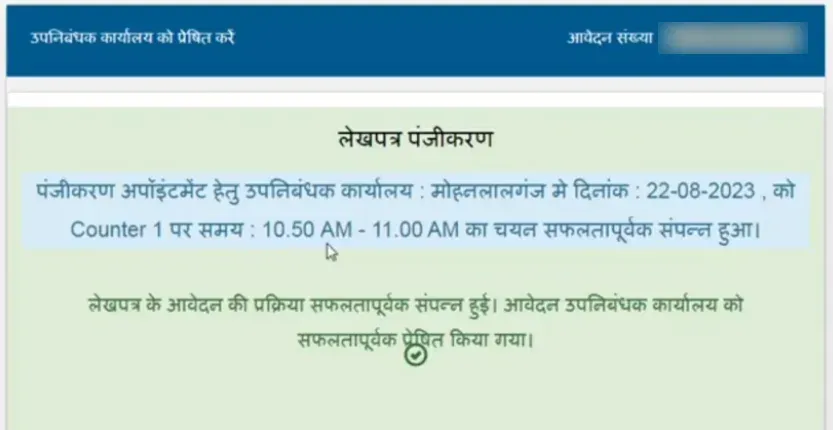
- Book SRO appointment. Select the Sub Registrar Office for your property’s jurisdiction → choose an available date and time slot. The confirmation names the office, date, counter and time; the example below shows a 10-minute slot (10.50-11.00 AM at Counter 1).
- Appear at the Sub Registrar Office. This step is IN PERSON — it cannot be done online. Buyer, seller, and 2 witnesses must all appear with original Aadhaar cards. Biometric authentication (Aadhaar-based fingerprint or iris scan) is conducted for all parties. The Sub Registrar verifies the documents, conducts biometric authentication, and registers the deed. The registered document is available for download on the portal after completion.
IGRSUP vs UP Bhulekh — The Distinction Most Buyers Miss
This confusion causes real problems. Buyers assume that after IGRSUP registration, the land record automatically updates on UP Bhulekh. It does not.
| Factor | IGRSUP | UP Bhulekh |
|---|---|---|
| Department | Stamp and Registration | Revenue (Board of Revenue) |
| What it does | Registers the TRANSACTION (sale, gift, lease) | Maintains the OWNERSHIP RECORD (khatauni) |
| Portal | igrsup.gov.in | upbhulekh.gov.in |
| What it proves | The sale/gift/transfer happened legally | Who currently owns the land in revenue records |
| Updates automatically? | — | NO — requires namantaran (mutation) separately |
After IGRSUP registration, you must apply for namantaran (mutation / dakhil kharij) at the Tehsil to update the Bhulekh khatauni to show your name as the new owner. Without namantaran, the old owner’s name remains on Bhulekh — even though you are the legal owner via registered deed. This causes problems for home loans (banks check Bhulekh, not just registry), building permissions (municipal authorities check Bhulekh), and future resale. Apply for namantaran as soon as possible after registration — recommended within 30-45 days (source: UP Revenue Code, 2006, Sections 34-35). The Lekhpal verifies the mutation documents, the Tehsildar issues a notice inviting objections from any concerned parties, and approves after the objection period if none are received. If dissatisfied with the Tehsildar’s order, an appeal can be filed with the SDM within 30 days.
Encumbrance Certificate — Barah Sala (12-Year History)
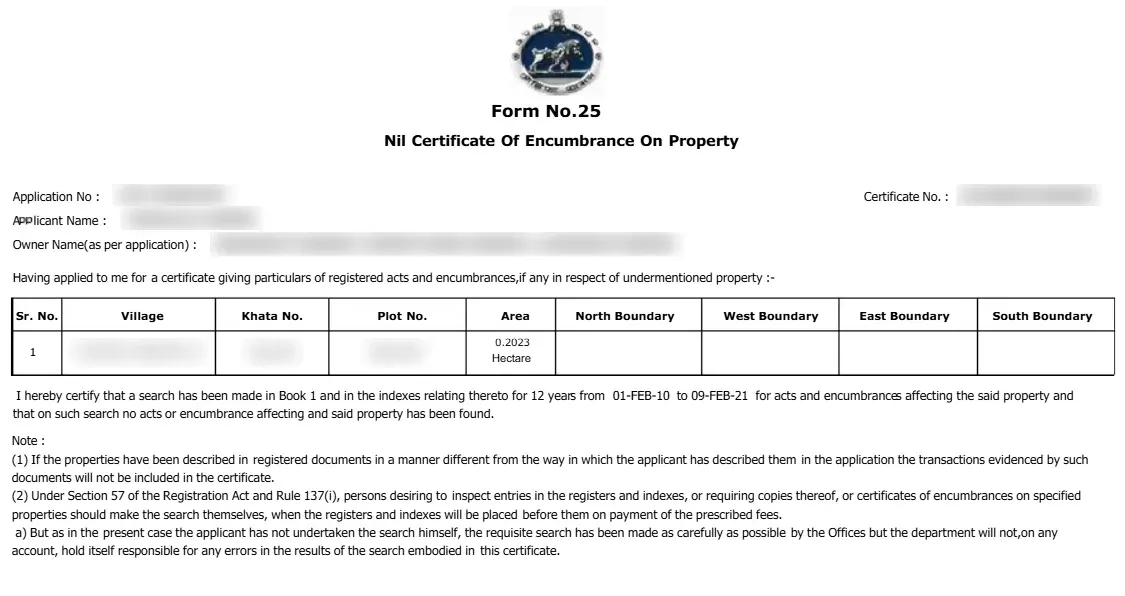
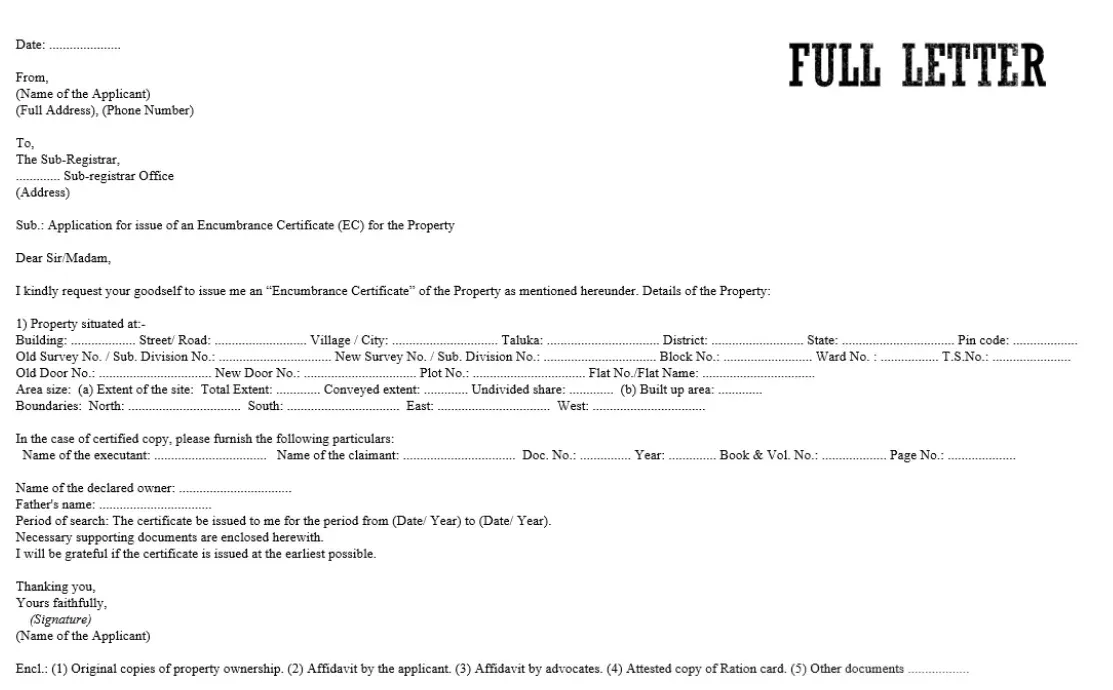
The Encumbrance Certificate (EC), called भारमुक्त प्रमाणपत्र or बारह साला (Barah Sala — literally “twelve years”), is a record of all registered transactions on a property over the past 12 years. It shows every sale, mortgage, lien, lease, and legal claim recorded against the property during that period.
Why it matters: An EC showing no encumbrances proves the property has clear title — no pending loans, no prior claims, no legal disputes. Banks require it before approving any home loan. Buyers need it for due diligence — if the EC shows a mortgage that hasn’t been discharged, the property has an outstanding loan against it regardless of what the seller claims.
How to Apply for the Encumbrance Certificate
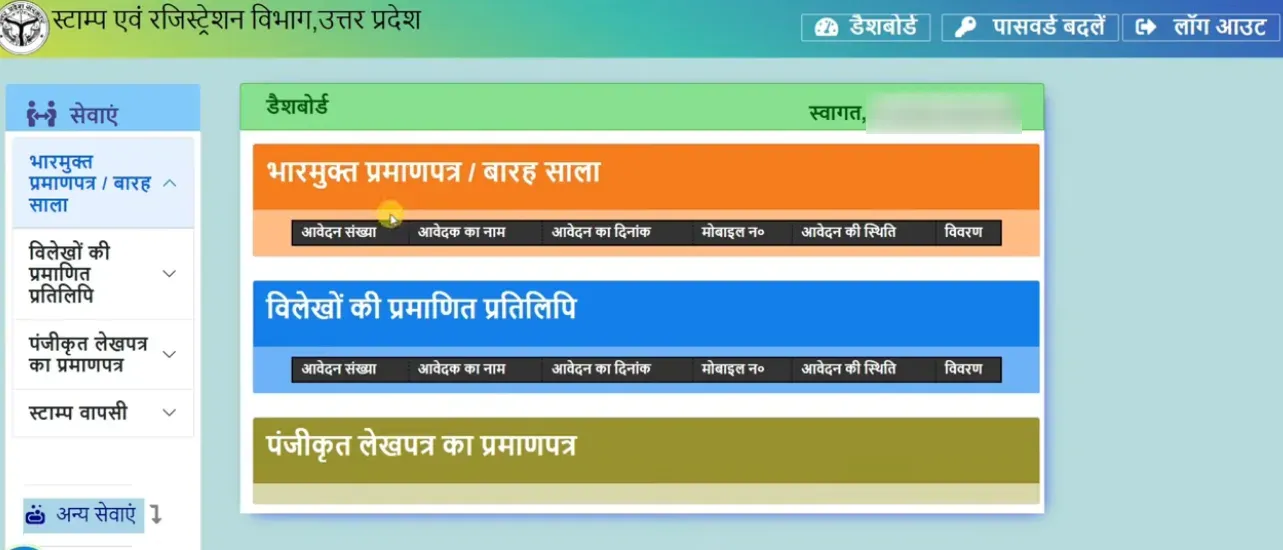
- Open the service. igrsup.gov.in → click “भारमुक्त प्रमाणपत्र / बारह साला.”
- Start the application. Click “आवेदन करें” → Start New Registration.
- Enter the details. Applicant details, property address (district, tehsil, village/mohalla), and the period for which the certificate is needed (typically 12 years, though longer periods can be requested for older properties — in-person at SRO, not available online).
- Review and submit. The EC is generated based on the Sub Registrar’s indexed records.
Marriage Registration — Hindu Marriage Act, 1955
IGRSUP handles marriage registration for Hindu marriages (including Buddhist, Jain, and Sikh marriages — all covered under the Hindu Marriage Act, 1955). Registration is done through the Deputy Registrar Office, not the Sub Registrar. Under the UP Marriage Registration Rules, 2017, registration of marriages is compulsory in Uttar Pradesh. However, an unregistered marriage is not legally invalid — the marriage itself remains valid under personal law, but registration provides the official certificate that government departments, courts, and banks accept as proof.
How to Register a Marriage
- Open the service. igrsup.gov.in → “विवाह पंजीकरण” (Marriage Registration).
- Spouse details. Enter details of both spouses — name, DOB, Aadhaar, address, photograph. Both must meet the legal age requirement (bride 18+, groom 21+).
- Marriage details. Enter marriage details — date, place, priest name (if applicable).
- Upload documents. Both spouses’ Aadhaar, marriage proof (wedding photographs, invitation card, priest’s certificate), address proof, passport photos.
- Witnesses. Enter 2 witness details with Aadhaar.
- Book an appointment. Book appointment at the Deputy Registrar Office → appear with both spouses, witnesses, and original documents for verification.
- Certificate. Marriage certificate issued after verification.
What to Do AFTER Property Registration — The 6-Step Post-Registry Checklist
Registration is not the last step — it is the middle step. Most buyers stop after getting the registered deed and face problems months later when records across different departments still show the old owner.
- Apply for namantaran on UP Bhulekh. Update the khatauni to show your name as the new owner. Through the Tehsildar at vaad.up.nic.in (RCCMS). Recommended within 30-45 days. The Lekhpal verifies; the Tehsildar issues a proclamation inviting objections and then decides (appeal to the SDM within 30 days).
- Transfer electricity connection (UPPCL). Visit the nearest electricity office or apply online with the registered deed to transfer the meter and connection to your name. Until transferred, the bill comes in the old owner’s name — and disconnection disputes can arise.
- Transfer water connection. Apply at the Jal Nigam (urban) or Jal Kal (municipal) office with the registered deed.
- Update property tax records. Visit the Nagar Nigam / Nagar Palika / Gram Panchayat to update the property tax assessment in your name. Old assessments in the previous owner’s name can create tax liability disputes.
- Update house tax. If separate from property tax in your area, update with the relevant municipal authority.
- Notify society/RWA (for apartments). Submit the registered deed to the housing society or Residents Welfare Association. The share certificate or membership must be transferred to the new owner.
The eDistrict Connection — When You Need Certificates for Property Transactions
Property transactions on IGRSUP connect to eDistrict UP in specific situations.
Selling inherited property: When a property owner dies and the heirs want to sell, they need the death certificate (issued by the local Registrar of Births and Deaths; copies obtainable from eDistrict eSathi portal) → legal heir certificate from the Tehsildar → completed Varasat (inheritance mutation) on Bhulekh → THEN register the sale on IGRSUP. Without the death certificate and completed Varasat, the heirs cannot legally register a sale.
Identity verification: Buyer and seller need Aadhaar cards. If Aadhaar details are incorrect, corrections go through UIDAI Seva Kendras — but the supporting documents for those corrections (birth certificate, domicile certificate) come from eDistrict.
Encumbrance cross-check: The EC from IGRSUP covers registered transactions. For revenue court disputes, check vaad.up.nic.in. For current ownership, check Bhulekh. For the solvency of the buyer or seller, the haisiyat certificate from eDistrict may be relevant — and that certificate requires a Bhulekh khatauni as supporting proof.
E-Stamp Verification — How to Confirm an E-Stamp is Genuine
After paying stamp duty, the system generates an e-stamp certificate with a Unique Identification Number (UIN). Buyers should verify the seller’s e-stamp before proceeding — forged stamps have been used in property fraud.
How to verify: igrsup.gov.in → e-stamp verification section → enter the UIN from the e-stamp certificate, issue date, and stamp duty type → the system confirms whether the stamp is genuine, the amount paid, and the date of issuance.
If the verification fails — the stamp is either forged or the details were entered incorrectly. Re-check the UIN carefully. If it still fails, do not proceed with the transaction and report to the Sub Registrar Office.
Registration Deadline — The 4-Month Rule
Under Section 23 of the Indian Registration Act, 1908, documents must be presented for registration within 4 months of execution (the date the deed was signed by the parties). If you miss this window, Section 25 allows the document to be accepted for up to 4 additional months (8 months total from execution) — but only if the delay was caused by “urgent necessity or unavoidable accident,” not simply because you forgot or were busy. The application is lodged with the Sub Registrar, who forwards it to the Registrar for the direction. The condonation fee under Section 25 can be up to 10 times the normal registration fee. Beyond 8 months, or if the delay does not qualify under the “urgent necessity” condition, registration can be refused entirely.
Registration deadline checker
- 4-month deadline (Section 23)
- 8-month outer limit (Section 25)
- Presentation date
- Days
This tool only counts calendar months under Sections 23 and 25 of the Registration Act, 1908. Whether a late document is accepted, and the fine, is decided by the registration officers; confirm with your Sub Registrar Office.
Quick Reference
| Detail | Information |
|---|---|
| Portal | igrsup.gov.in |
| Department | Stamp and Registration Department, Government of UP |
| Department Head | Inspector General of Registration / Commissioner of Stamps |
| Headquarters | Revenue Council Building, Civil Lines, Prayagraj |
| Camp Office | Vishwas Commercial Complex, Gomti Nagar, Lucknow |
| Contact (Prayagraj) | 0532-2623667 |
| Contact (Lucknow) | 0522-2308697 |
| Portal helpline | 1800 180 1476 (toll-free), WhatsApp 9235930505 (shown on the igrsup.gov.in homepage) |
| Sub Registrar Offices | 379 across 75 districts, 18 divisions |
| Revenue (FY 2023-24) | ₹27,078.77 crores (3rd largest after GST, Excise) |
| Documents Registered Annually | ~40 lakh (62 types) |
| Annual SRO Visitors | ~2 crore |
| Software | PRERNA 3.0 (in-house, SROs computerized 2012-2016) |
| E-Stamping Points | 10,000+ (all subdivisions) |
| Stamp Duty (Male) | 7% |
| Stamp Duty (Female) | 6% (1% concession) |
| Stamp Duty (Joint M+F) | 6.5% |
| Registration Fee | 1% (uniform) |
| Calculated On | Property value or circle rate — whichever is higher |
| Registration Deadline | 4 months from deed execution (Section 23, Registration Act 1908) |
| Condonation (Section 25) | Up to 8 months total — only for “urgent necessity or unavoidable accident” (up to 10x fee) |
| Women’s Concession Cap | Properties up to ₹1 crore (Cabinet approval July 22, 2025; previously ₹10 lakh) |
| Marriage Registration | Compulsory in UP (UP Marriage Registration Rules, 2017) — unregistered marriage still valid |
| Encumbrance Certificate | 12-year (Barah Sala) transaction history |
| Hindu Marriage Registration | Hindu Marriage Act, 1955 at Deputy Registrar Office |
| Governing Laws | Indian Registration Act, 1908 + Indian Stamp Act, 1899 |
Frequently asked questions
What is IGRSUP?
The official online portal (igrsup.gov.in) of the Stamp and Registration Department, Government of Uttar Pradesh. Headed by the Inspector General of Registration and Commissioner of Stamps, headquartered in Prayagraj. Handles property registration, stamp duty, encumbrance certificates, marriage registration, property search, and e-stamp verification across 379 Sub Registrar Offices in 75 districts. Collected ₹27,078.77 crores in FY 2023-24 — the 3rd largest revenue source for UP after GST and Excise.
What is the stamp duty in UP?
7% for male buyers, 6% for female buyers (1% concession), 6.5% for joint male-female, 6% for joint female-female, 7% for joint male-male. Registration fee is 1% for all. Calculated on the property value or circle rate — whichever is higher. (Confirmed by homefirstindia.com, godrejcapital.com, squareyards.com, and bajajfinserv.in for 2026 rates.)
Is property registration fully online?
Preparation is online — application, stamp duty payment, document upload, appointment booking. But the final registration step requires physical presence at the Sub Registrar Office for biometric verification (Aadhaar fingerprint/iris) of buyer, seller, and 2 witnesses. This in-person step cannot be skipped.
What is an encumbrance certificate / Barah Sala?
A 12-year record of all registered transactions on a property — sales, mortgages, liens, legal claims. Proves the property has clear title. Mandatory for home loans and recommended for all property purchases. Apply online at igrsup.gov.in → "भारमुक्त प्रमाणपत्र / बारह साला."
Does registration on IGRSUP update Bhulekh automatically?
No. IGRSUP registration and Bhulekh land records are maintained by different departments (Stamp & Registration vs Revenue). After IGRSUP registration, you must separately apply for namantaran (mutation) at the Tehsil to update the khatauni on Bhulekh to show your name.
How do I register a marriage on IGRSUP?
For Hindu marriages (including Buddhist, Jain, Sikh) under the Hindu Marriage Act, 1955: apply on igrsup.gov.in → "विवाह पंजीकरण" → upload documents → book appointment at Deputy Registrar Office → both spouses + witnesses appear → certificate issued. For inter-faith marriages, the Special Marriage Act, 1954 applies with a 30-day notice period.
What is the circle rate and where do I check it?
The circle rate is the government's minimum valuation (guideline rate) for property in a specific area. Stamp duty is calculated on the circle rate or transaction value, whichever is higher. Check on igrsup.gov.in or at the Sub Registrar Office for your district.
Can I verify if an e-stamp is genuine?
Yes — igrsup.gov.in → e-stamp verification → enter the UIN, issue date, and duty type. The system confirms whether the stamp is genuine and shows the amount paid.
What if I miss the 4-month registration deadline?
Section 23 gives 4 months from execution. Section 25 allows up to 4 more months (8 total) but only for "urgent necessity or unavoidable accident" — with a condonation fee up to 10x normal. Beyond 8 months, registration can be refused entirely.
I inherited property — how do I sell it through IGRSUP?
First: get the death certificate from the local Registrar (copies via eDistrict eSathi portal) → legal heir certificate from Tehsildar → complete Varasat on Bhulekh (inheritance mutation) → THEN register the sale on IGRSUP. All steps in order — without Varasat completion, the sale cannot be legally registered.